
CAREER & SALARY GUIDE
Composite Technician
Explore salaries, skills, qualifications, career paths and opportunities for Composite Technicians.
Your Guide to a Career in
Composites
Composite technicians manufacture components from combined materials such as carbon fibre, glass fibre and Kevlar bonded with resin, creating structures that can be stronger and lighter than traditional metal alternatives.
These skills are used across aerospace, motorsport, marine and renewable energy manufacturing, where lightweight and high-performance structures play an important role.
This guide covers current composite technician salary benchmarks, the qualifications and training routes available, what the work involves and how a career in composites can develop over time.
Inside the Role
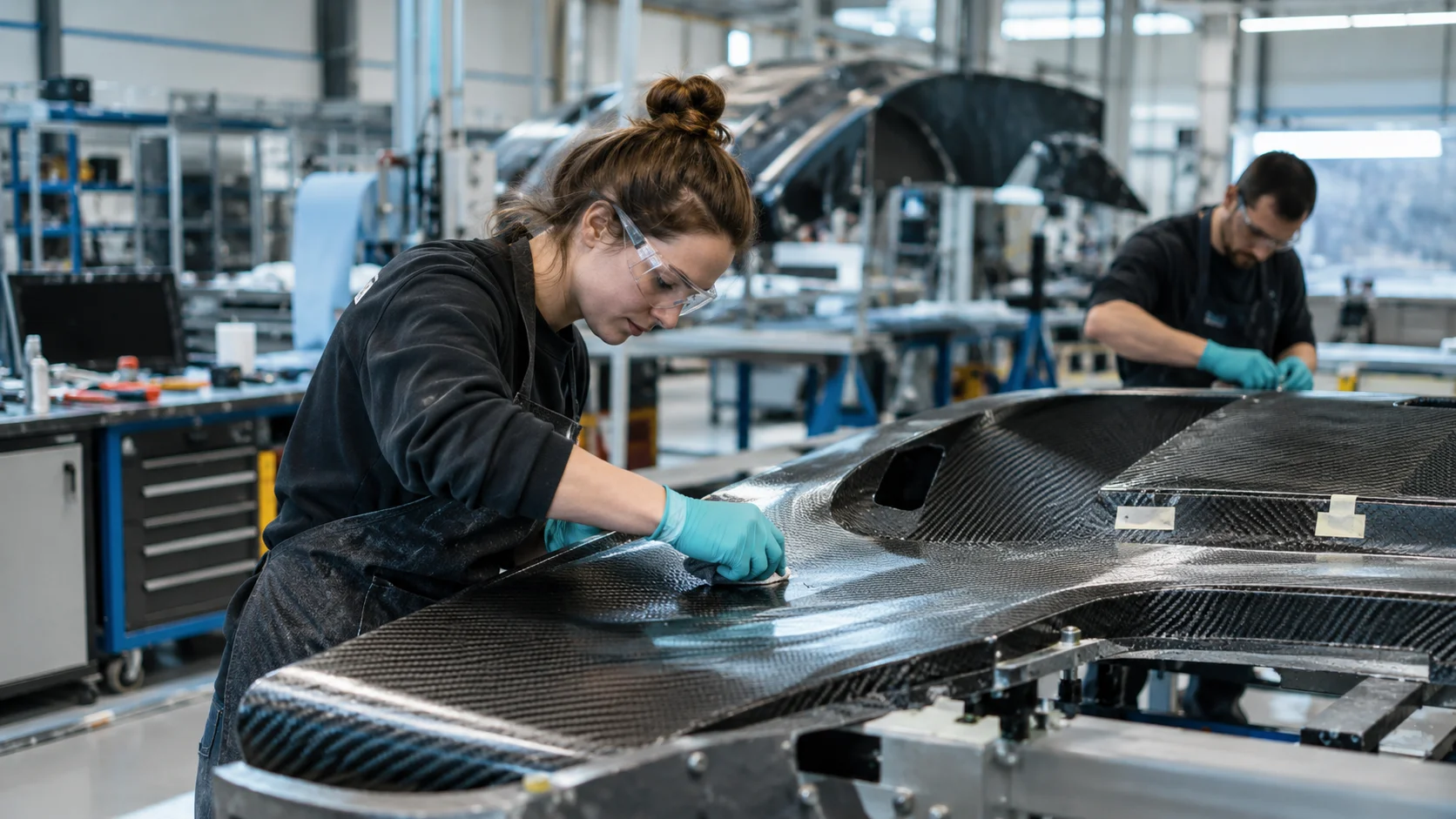
From preparing materials to inspecting finished components, composite work combines precision, specialist processes and strict quality control.
Preparing Moulds & Materials
Work from engineering drawings and laminate schedules to prepare moulds, plugs and composite materials for production.
Lay-Up & Infusion
Use techniques including hand lay-up, pre-preg, resin infusion and vacuum bagging to build components to specification.
Curing & Quality Control
Manage curing processes and inspect finished parts to ensure dimensional, structural and cosmetic requirements are met.
Composite Repair
Assess and repair damaged composite structures, using a more diagnostic approach than new-build production work.
Composite Technician Salary Guide 2027
The government's own occupational standard for the role, developed with employers including Rolls-Royce, GE Aviation, McLaren Racing and the National Composites Centre, puts the median salary for a composite technician at £32,266 a year.
Live vacancies show a fairly wide spread either side of that median depending on sector and seniority. A composite technician role in Lee-on-the-Solent working across hand lay-up, resin infusion and pre-preg techniques for aerospace and wind energy clients was advertised at £35,000 to £38,000. A composite manufacturing technician role in Farnborough, working on a stratospheric aircraft programme, offered £41,000 to £45,000. At the senior end, a supervisor-level composite technician role at RAF Brize Norton was advertised at £48,400, against £44,000 for the standard technician grade on the same contract.
| Career Stage | Typical Annual Salary | Typical Experience |
| Apprentice, year 1 | £13,500 to £15,600 | Level 3 Composites Technician apprenticeship |
| Apprentice, later years | £18,000 to £25,000 | Wage rises through the typical 36-month programme |
| Newly qualified | £26,000 to £32,000 | General composites manufacturing |
| Experienced technician | £32,000 to £41,000 | Aerospace, motorsport or wind energy specialism |
| Senior technician / supervisor | £41,000 to £48,500 | Leading a cell or shift, complex repair work |
| Composites engineer / technologist | £45,000 to £60,000+ | Degree-level progression into materials development |
Sector makes a noticeable difference here. Aerospace and defence composite work, along with the emerging space and high-altitude platform sector, consistently pays at the upper end of the range, reflecting the certification and quality-control burden that comes with safety-critical structures, while general industrial or construction composite work sits closer to the median.
What Can Increase Your Earnings?
Sector can make a noticeable difference.
Aerospace and defence composite work, along with emerging space and high-altitude platform programmes, tends to sit towards the upper end of the salary range.
These environments carry more demanding certification and quality-control requirements because the components involved can be safety-critical.
General industrial and construction composites roles tend to sit closer to the overall median.
Is Composite Technician a Good Career?
The research identifies several reasons composites can offer a strong long-term technical career.
Composite materials have steadily replaced metal in areas including aerospace, automotive, marine, rail, construction and renewable energy because they can reduce weight while maintaining strength.
Employers involved in developing the national occupational standard include organisations such as Rolls-Royce, GE Aviation, Aircelle and the National Composites Centre, representing many of the industries using these skills.
A Clear Route Into the Trade
Composite technicians do not need a university degree to begin their careers.
There is an established apprenticeship pathway that allows candidates to earn while developing practical skills and recognised qualifications.
Skills Across Multiple Industries
Composite expertise is not limited to one market.
Alongside the traditional aerospace and motorsport base, wind energy has become an important secondary market for composite skills, broadening the range of environments in which technicians can work.
What Should You Consider?
There are practical trade-offs to understand.
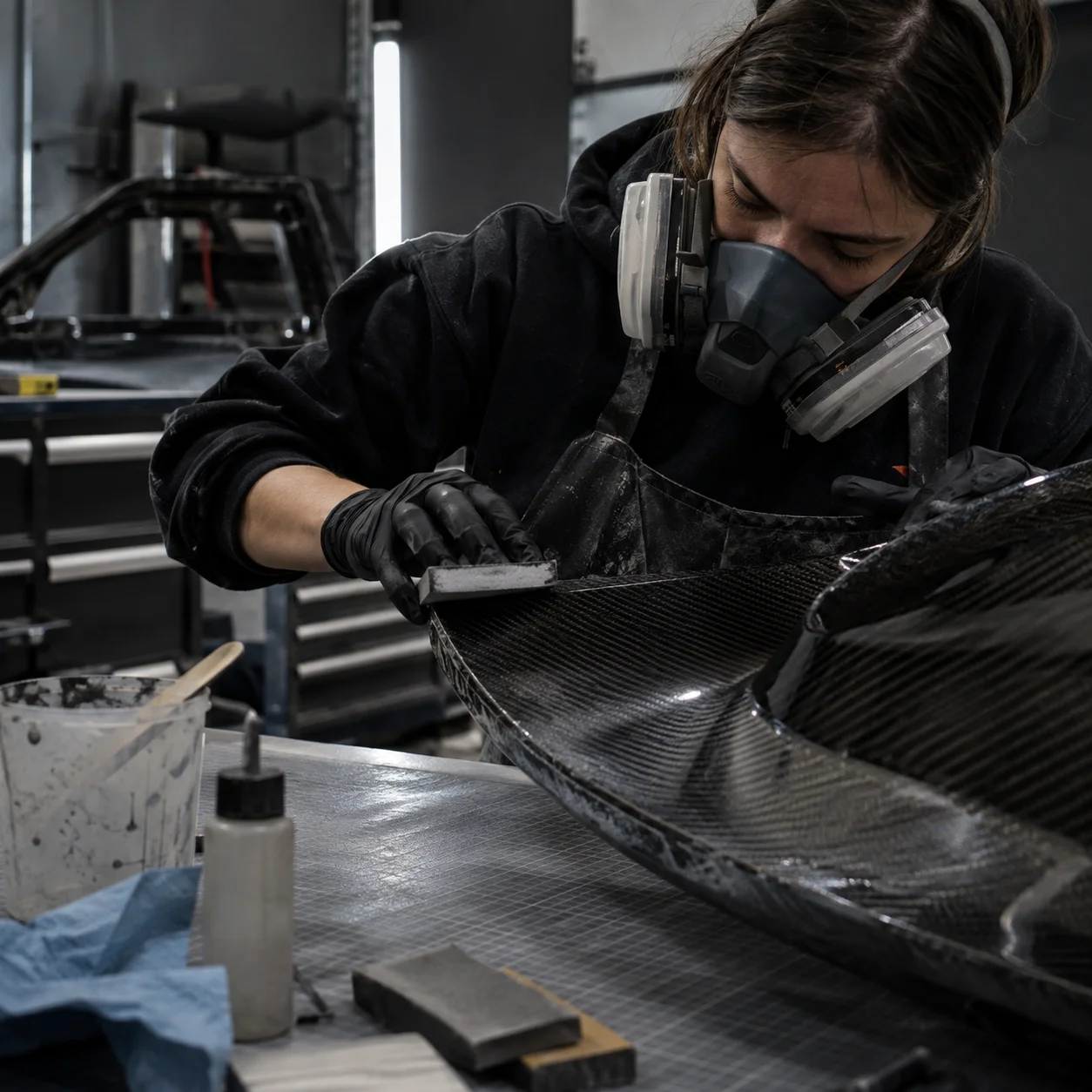
Some composite processes involve resins and solvents that require appropriate ventilation and protective equipment.
Production work can also become repetitive within individual lay-up cells, while apprenticeship salaries can be relatively modest during the first years of training.
These are important considerations for anyone deciding whether the working environment suits them.
How to Become a Composite Technician
There is no single mandatory qualification required to become a Composite Technician, but there are established routes into the profession. Apprenticeships are the main entry point, while candidates from related engineering backgrounds may be able to enter through alternative technical qualifications or specialist training.
Level 3 Composites Technician Apprenticeship
The Level 3 Composites Technician apprenticeship is the main recognised entry route.
It typically lasts around three years including assessment and combines paid, practical training with a recognised Level 3 engineering qualification.
Individual employers set their own entry requirements, although GCSEs in maths, English and a science or technical subject are commonly requested.
Employers involved in shaping the apprenticeship standard include Rolls-Royce, GE Aviation, McLaren Racing, LM Wind Power and the National Composites Centre.
BTEC, NVQ or Specialist Training
Some employers accept candidates with a general engineering BTEC or NVQ combined with specialist training in areas such as advanced composite repair.
This route can suit people moving into composites from another engineering discipline or from an armed forces technical background.
Professional Registration
Completing the Level 3 apprenticeship can meet the standard required to apply for Engineering Technician, or Eng.Tech., status.
Professional registration may be available through organisations including the Institute of Materials, Minerals and Mining or the Institution of Mechanical Engineers and can support progression into more senior technical positions.
Further Study
Technicians who want to progress towards composites engineering or materials development can continue their education through a Higher Level Apprenticeship or foundation degree in areas such as Composites Manufacture, Materials Engineering or Materials Science.
This can later lead towards a full honours degree where employer support is available.
What the work actually involves
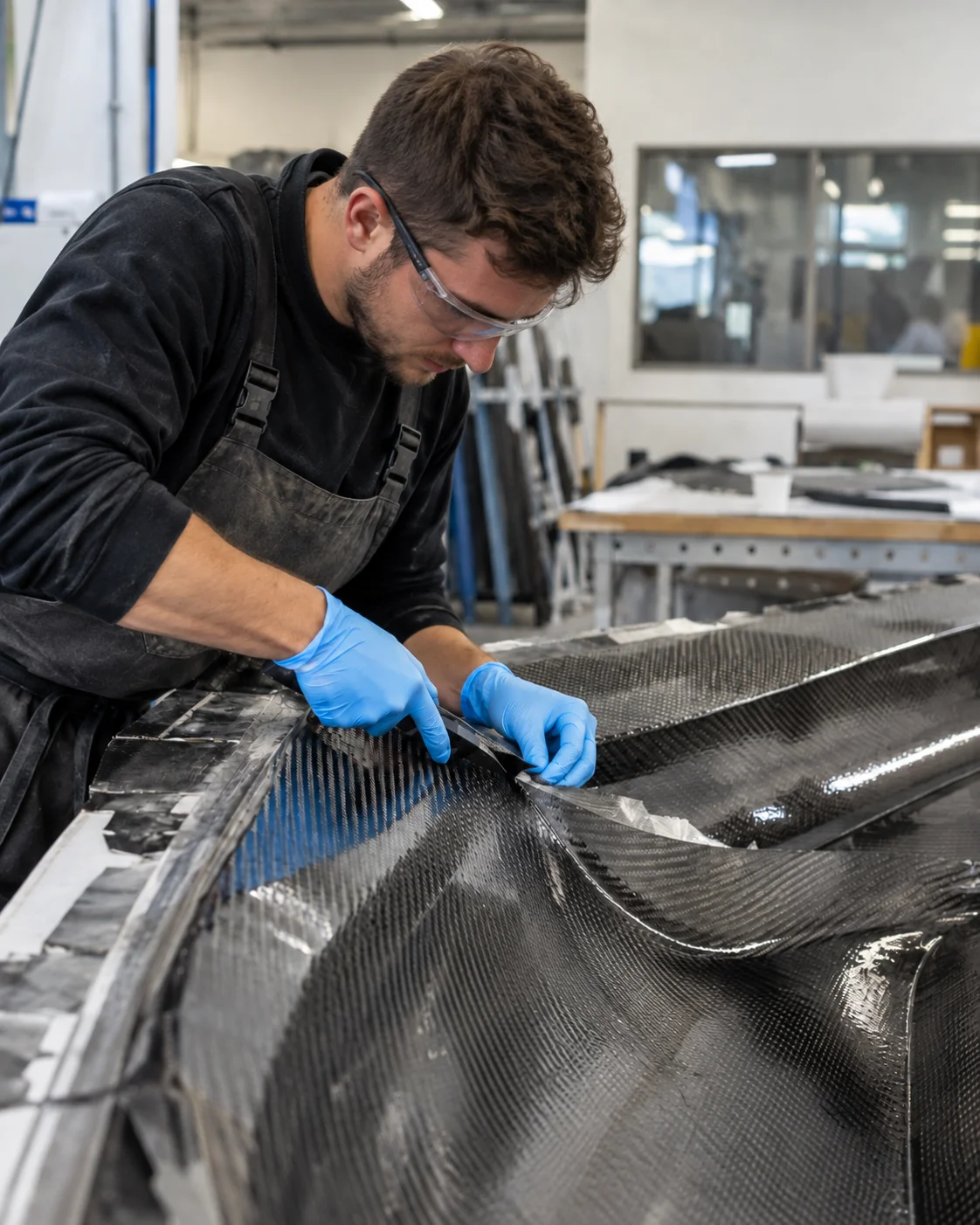
Composite technicians typically work from engineering drawings and laminate schedules to prepare moulds and plugs, lay up dry fibre reinforcement or pre-preg material by hand, manage resin infusion and vacuum bagging processes, and cure components to specification. Quality checking is a constant thread through the job, since composite parts, particularly in aerospace, undergo strict dimensional and cosmetic inspection before they're signed off. Many roles also involve repair work on damaged composite structures, requiring a different, more diagnostic skill set than production lay-up alone.
Job titles across the trade vary more than in most engineering disciplines and include Composites Laminator, Composites Inspector, Composites Repairer, Composite Materials Technician and Composites Tool-Maker, reflecting how specialised the field has become as it's grown.
Career progression
From a qualified technician role, the common next steps are:
- Senior technician or team leader, overseeing a lay-up cell or shift and mentoring newer starters
- Quality inspector, focused specifically on dimensional and structural compliance, particularly valued in aerospace
- Composites engineer or technologist, typically requiring further study, moving into process development and new material qualification
- Specialist repair technician, a well-paid niche focused on in-service damage repair rather than new-build production
FAQS
Your Composite Technician Questions Answered
Do I need a science background to work in composites?
A science background can be helpful, but it is not essential.
A foundation in maths and a willingness to learn about materials through training can be enough to begin, with the apprenticeship providing the underpinning technical knowledge required.
Which industries pay the most for composite skills?
The research places aerospace, defence and emerging space and high-altitude platform work towards the top of the salary range, with wind energy and motorsport also providing strong opportunities.
Is Composite Technician work dangerous?
With appropriate training and PPE, composite manufacturing operates within controlled working environments.
Some processes involve handling resins and solvents, which require suitable ventilation and correct handling procedures under normal health and safety requirements.
Can I move into composites from another trade?
Yes. Candidates can move into composites from general engineering, laminating roles within boatbuilding or armed forces technical backgrounds.
Depending on previous experience, a shorter specialist training programme may be appropriate rather than completing the full apprenticeship route.
Explore Automotive, F1 & Motorsport Jobs
Salary figures are drawn from the Skills England occupational standard for composites technician, apprenticeship wage data from the government's Find an Apprenticeship service, and live vacancies advertised through Find a Job (DWP). All details correct as of October 2026.
For up to date salary and job information, speak to Mane Contract Services directly.