
CAREER & SALARY GUIDE
Cable Jointer
Explore salaries, skills, qualifications, career paths and opportunities for Cable Jointers.
Your Guide to a Career in
Cable Jointer
Cable jointers make, repair and terminate the underground and overhead cable connections that keep the electricity network running.
It is physically demanding, weather-exposed work, but fully qualified high-voltage jointers can be among the better-paid skilled trades within UK utilities.
This guide covers current cable jointer salary benchmarks, recognised training routes, the work involved and how a career can progress once you become fully qualified.
Inside the Role
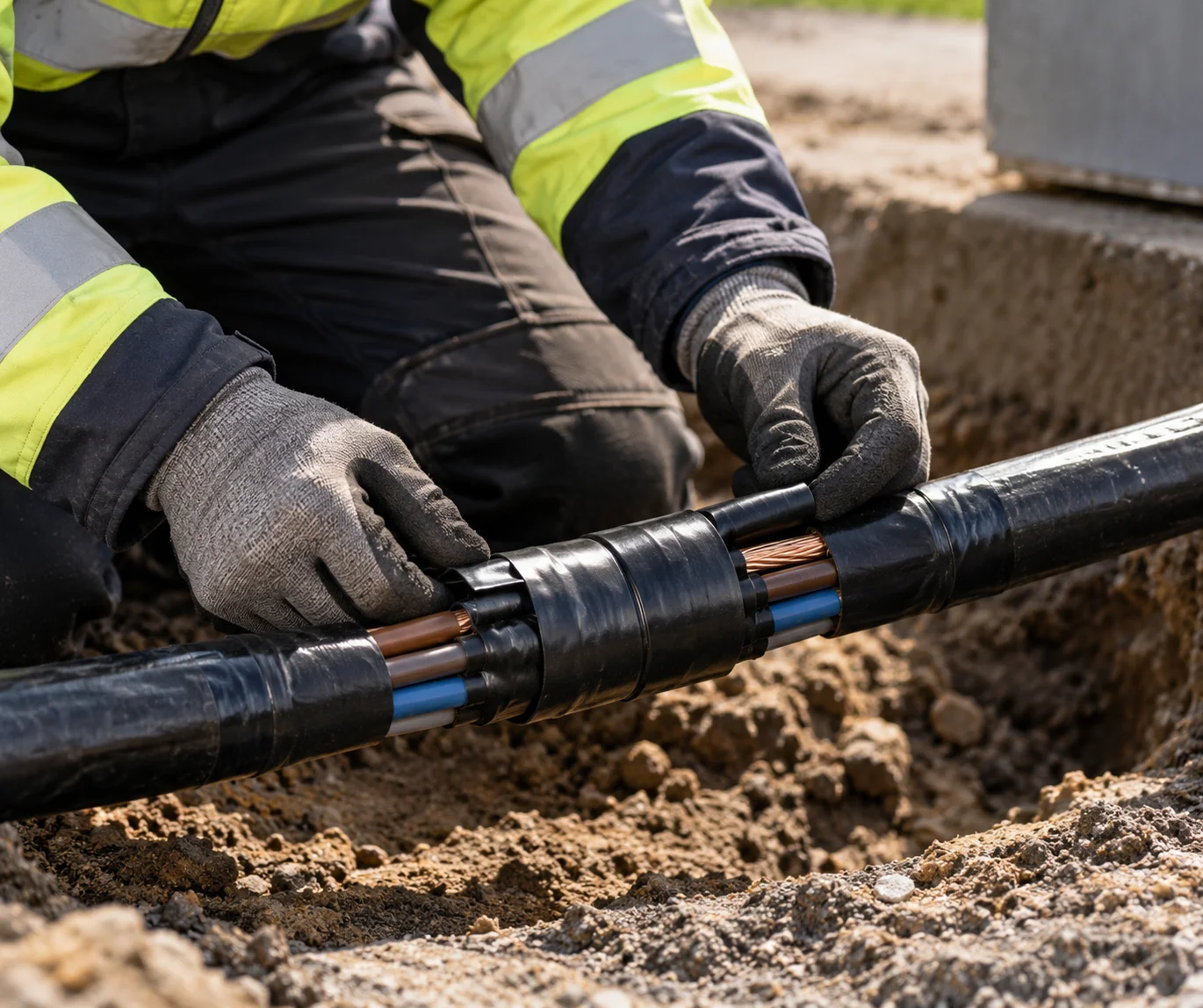
From preparing cables to responding to faults, cable jointing combines technical skill, safety awareness and practical work across the electricity network.
Cable Preparation & Jointing
Expose underground cables, prepare new sections and create or repair joints to keep the network connected.
Termination & Testing
Terminate cables into transformers, switchgear and substations, then test insulation, phasing, continuity and earthing before energising.
Fault Finding & Network Work
Locate faults on live and dead networks using specialist testing equipment and, where required, work on overhead connections at height.
Standby & Site Work
Respond to emergency faults and power cuts, work outdoors in varied conditions and travel between sites as part of the working day.
Cable Jointer Salary Guide 2027
Cable jointer pay is unusually well documented because almost all jointers are trained and employed by a handful of large network operators, known as Distribution Network Operators or DNOs, whose trainee and qualified salary bands are published as part of their recruitment.
SSEN's adult trainee jointer programme, for example, starts trainees on £29,504, rising to £36,686 on completion of the programme, with a fully qualified jointer earning circa £51,000 on-target earnings once overtime and standby payments are included. National Grid, UK Power Networks and Western Power Distribution run comparable programmes with similar pay structures. Independent contractors working on high-voltage jointing for private clients have advertised temporary day-rate positions worth up to £42,458 a year depending on qualifications.
| Career Stage | Typical Annual Salary | Typical Experience |
| Trainee jointer (year 1) | £28,000 to £32,500 | Base salary during initial training school phase |
| Trainee jointer (on completion) | £33,000 to £37,000 | After 18 to 24 months, before full sign-off |
| Fully qualified jointer (base) | £34,500 to £41,000 | Base salary once fully authorised on the network |
| Fully qualified jointer (OTE) | £48,000 to £51,000+ | Including standby payments and overtime |
| Contract / high-voltage specialist | Up to £42,000+ | Fixed-term or agency roles on private networks |
What Can Increase Your Earnings?
The difference between base salary and total on-target earnings can be significant.
Standby rotas and emergency call-outs are a routine part of the profession and are paid separately from basic salary. The research indicates that these additions can amount to around £10,000 to £15,000 per year.
Jointers who take on more standby shifts can therefore earn noticeably more than those working primarily standard hours.
How Does Cable Jointer Pay Compare With Other Trades?
Once overtime and standby are included, pay for a fully qualified cable jointer can sit above many comparable manual trades and around, or slightly above, the earnings of qualified electricians working in industrial environments.
The trade-off is the nature of the work. Cable jointing involves outdoor, all-weather and physically demanding work, alongside a genuine standby commitment.
For people comfortable with those requirements, it can provide a well-paid route into the electricity industry without requiring a university degree.
How to Become a Cable Jointer
Unlike a domestic electrician, a cable jointer working for a network operator does not usually need an individual electrical licence. Training is typically delivered by the Distribution Network Operator or a specialist training provider, with candidates working towards recognised electrical qualifications and network authorisations.
Apply to a Distribution Network Operator
Operators including SSEN, National Grid, UK Power Networks, Western Power Distribution, Northern Powergrid and Electricity North West run trainee schemes, commonly advertised as Trainee Jointer or Jointer's Mate positions.
Previous electrical experience is not always required, making these genuine entry-level routes into the profession.
Complete Initial Training
New starters usually spend an initial period at the operator's dedicated training school.
This can last from several weeks to a few months and covers areas such as cable preparation, jointing techniques, testing and safety procedures before trainees begin working on the live network.
Build Experience on the Network
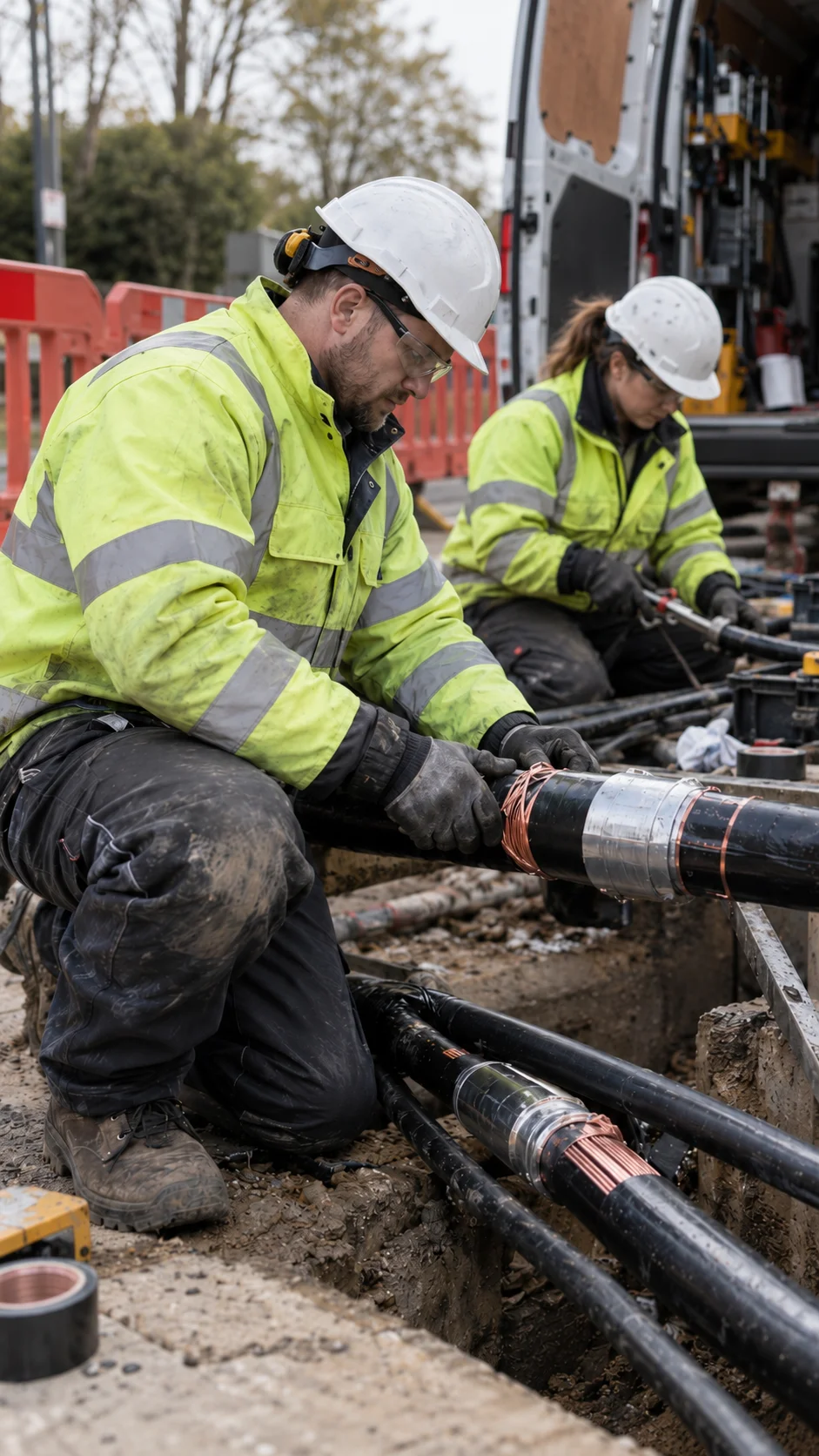
After the training school phase, trainees are typically paired with an experienced, qualified jointer.
The full programme commonly takes around 18 to 24 months, during which trainees build a logged portfolio of completed jointing work and develop practical experience under supervision.
Gain Your Authorisations
As competence is signed off, jointers progress through different authorisation levels, from low-voltage jointing through to 11kV and 33kV high-voltage work.
Pay can increase as skills and authorisations are added, with the goal of becoming fully authorised to work independently on the network.
Recognised Qualifications and Alternative Training
Alongside operator training schemes, City & Guilds qualifications such as 2339 and 2304 are widely recognised and may be specifically requested when jointers move between employers or into contract work.
A JIB grading or ECS card is also commonly expected once qualified as proof of competence within electrical contracting.
Independent specialist training providers, including EU Skills-approved centres and private cable jointing schools, also offer standalone courses. These can be particularly useful for qualified electricians who want to add cable jointing to their existing skill set.
Rather than being delivered as one continuous programme, these courses can be completed as individual modules over time as additional authorisations are gained.
What Does a Typical Day Look Like?
Cable jointers spend their working week on a mix of planned maintenance and emergency response. Typical tasks include:
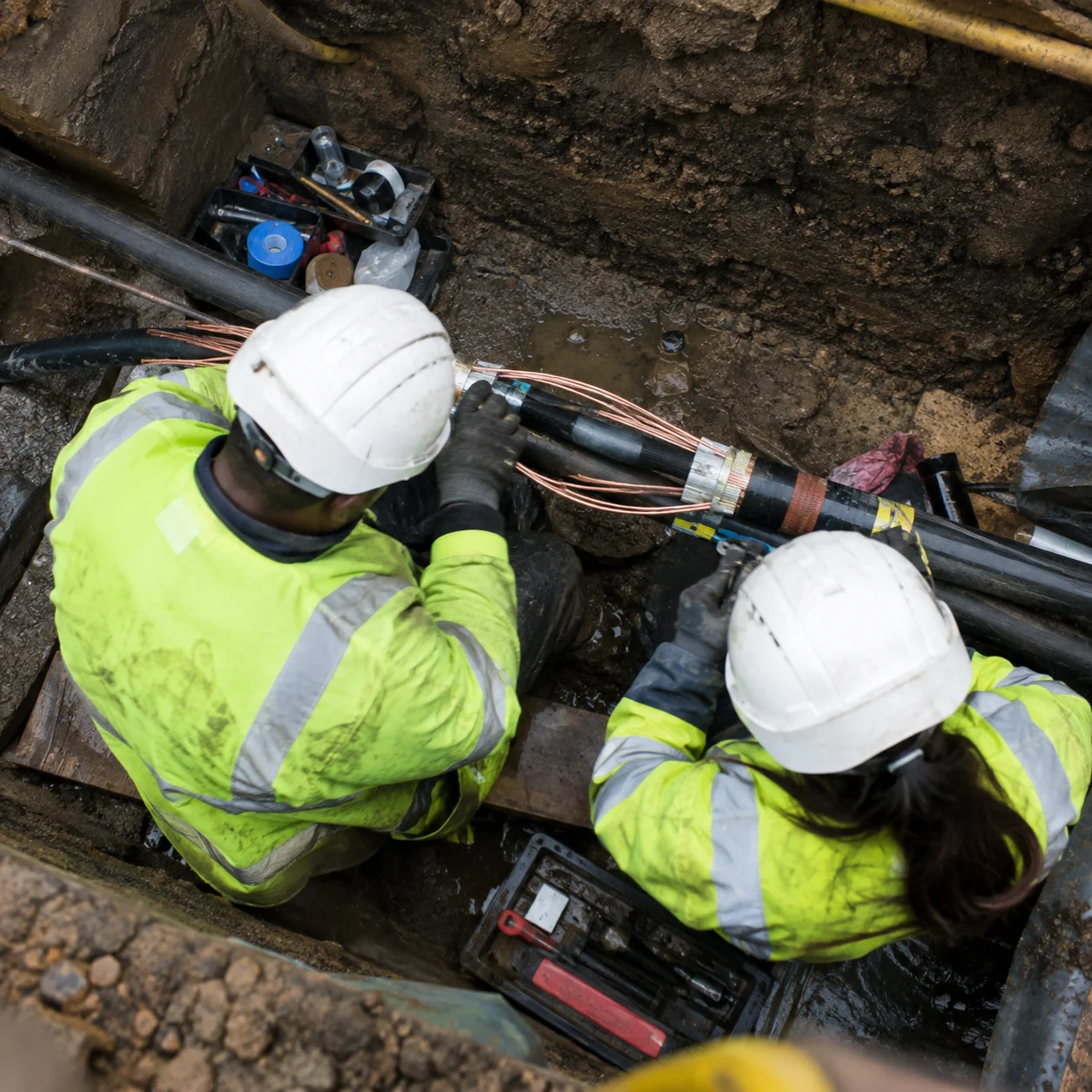
- Excavating to expose underground cable, then preparing and jointing new sections or repairing faults
- Terminating cables into transformers, switchgear and substations
- Testing insulation, phasing, continuity and earthing to confirm work is safe before energising
- Locating faults on live and dead networks using specialist testing equipment
- Working at height on overhead line connections where the role covers both underground and overhead work
- Being part of a standby rota, responding to power cuts and emergency faults outside normal hours
The work is outdoors in all weather, frequently physically demanding, and requires comfort working in confined spaces such as cable ducts and pits, as well as at height on overhead systems for jointers covering both disciplines. A full, clean UK driving licence is a standard requirement across almost every advertised role, since jointers travel between sites throughout the day.
Career progression
Once fully qualified, jointers typically progress in one of these directions:
- Senior or high-voltage jointer, taking on 33kV and above work, which carries a further pay premium
- Team leader or field supervisor, managing a crew of jointers and coordinating planned works
- Trainer or assessor, moving into the training school to develop the next generation of jointers
- Independent contractor, working across multiple clients once qualifications and JIB grading are in place, often for a higher day rate than direct employment
FAQS
Your Cable Jointer Questions Answered
Do I need electrical qualifications before applying?
No. DNO trainee schemes are designed for people without a previous electrical background and provide training from the beginning, although previous trade or manual skills experience can be useful.
Is a driving licence essential?
In practice, yes. Almost every trainee and qualified cable jointer role lists a full UK driving licence as a requirement because the job involves travelling between sites throughout the working day.
How long does it take to become fully qualified?
Most trainee programmes take around 18 to 24 months to reach full authorisation.
Developing towards the highest voltage authorisations can continue for several years after this as a jointer gains more experience and progresses into more senior work.
What is the difference between a cable jointer and an electrician?
An electrician generally works on wiring and installations inside buildings and holds individual qualifications or registrations relevant to that work.
A cable jointer works on the distribution network itself, including the cables connecting substations and properties, and is authorised through their employer rather than through an individual electrical licence.
Latest Jobs
Salary figures are drawn from live and recently closed vacancies published by SSE/SSEN, National Grid and other network operators via Find a Job (DWP). On-target earnings figures include overtime and standby payments as stated by the employer. All details correct as of October 2026.
For up to date salary and job information, speak to Mane Contract Services directly.