The Dawn of AI-Driven Manufacturing Recruitment
08 Apr, 2026


Members of Parliament have issued a clarion call for immediate government intervention to ad...
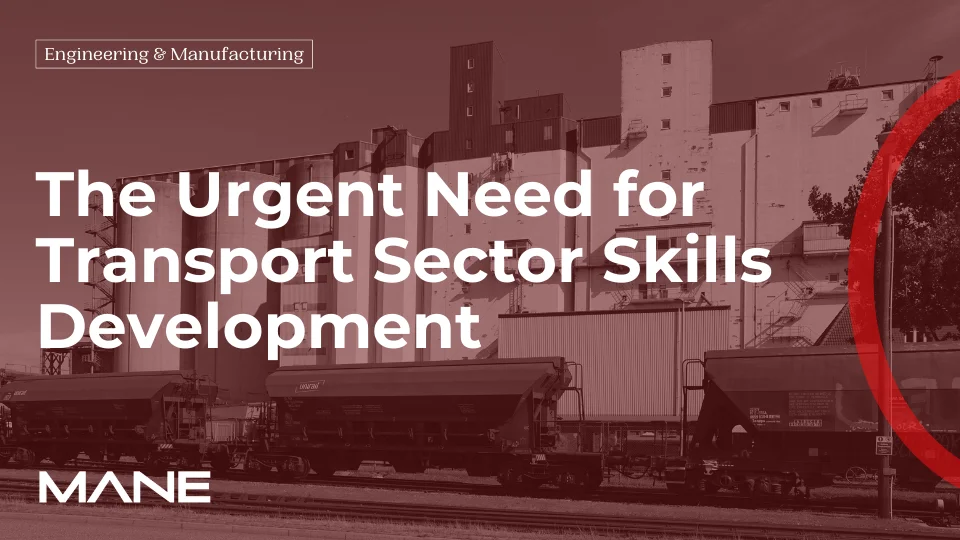
Members of Parliament have issued a clarion call for immediate government intervention to address the escalating skills crisis within the UK's transport manufacturing sector. The Transport Committee's comprehensive report highlights the urgent need to strengthen the industry by developing a robust, skilled workforce capable of meeting the challenges of modern manufacturing whilst capitalising on opportunities presented by legislative reforms in bus and rail services, alongside the transition to cleaner fuels. This critical assessment arrives at a pivotal moment when the transport manufacturing sector faces unprecedented transformation driven by technological advancement and environmental imperatives. The report not only identifies significant skills shortages across aerospace, automotive, maritime and rail sectors but also provides a roadmap for addressing these deficiencies through strategic recruitment, improved retention mechanisms, and comprehensive workforce development programmes.
The inquiry's findings underscore a fundamental shift in the skills landscape, with evidence revealing that the journey towards net zero emissions has fundamentally transformed the competencies required across automotive and wider transport manufacturing industries. This transformation demands immediate action from government, educational institutions, and industry stakeholders to ensure the UK maintains its competitive position in global transport manufacturing whilst meeting ambitious environmental targets. The recommendations span vocational training reform, innovative approaches to skills recognition, and targeted investment in workforce development, particularly focusing on underrepresented groups such as women in manufacturing roles.
The Transport Committee's investigation revealed alarming skills gaps permeating every corner of the transport manufacturing landscape. Aerospace companies report difficulties in securing engineers with expertise in advanced materials and digital manufacturing technologies, whilst automotive manufacturers struggle to recruit specialists in electric vehicle propulsion systems and battery technology. Maritime and rail sectors face similar challenges, with traditional engineering skills becoming increasingly insufficient as these industries embrace automation, digitalisation, and sustainable technologies.
The report emphasises that these shortages are not merely quantitative but qualitative in nature. The Department for Transport has been urged to consult directly with transport manufacturers to assess how effectively the UK's vocational training system supplies skilled workers to the sector. This consultation process aims to identify specific gaps between current training provision and industry requirements, with findings to be shared across government departments to guide future training policy development. Such cross-governmental collaboration represents a crucial step towards creating a coherent, responsive skills development ecosystem that can adapt to rapidly evolving industry needs.
Furthermore, the evidence gathered during the inquiry highlighted that traditional educational pathways are failing to produce graduates with the interdisciplinary competencies demanded by modern transport manufacturing. Engineers now require not only technical proficiency but also understanding of environmental science, data analytics, and systems integration. This complexity necessitates a fundamental reimagining of vocational education and apprenticeship programmes to ensure they deliver workers capable of thriving in this multifaceted environment. The transition to net zero has particularly amplified this need, as manufacturers seek professionals who can navigate the intersection of mechanical engineering, electrical systems, and sustainable design principles.
One of the report's most progressive recommendations involves the establishment of a 'competency passport' system, which Skills England has been called upon to develop and implement. This innovative approach would recognise and harness transferable skills within the transport manufacturing sector, enabling workers to move more fluidly between roles and industries. Dr Benjamin Silverstone, head of Skills Policy and Strategy at Warwick Manufacturing Group (WMG), expressed strong support for this initiative, stating: "We are passionate about the use of competency passports to showcase transferable skills and to help the workforce move more easily across traditional sector boundaries, bringing much-needed expertise and experience into the transport sector."
The competency passport concept addresses a longstanding inefficiency in the UK labour market, where workers often possess valuable skills that go unrecognised when transitioning between related industries. By creating a standardised framework for documenting and validating competencies, the passport system would reduce barriers to mobility whilst helping employers identify suitable candidates more efficiently. This approach proves particularly valuable in transport manufacturing, where aerospace, automotive, rail, and maritime sectors share numerous foundational skills despite their distinct specialisations.
However, the report also identifies concerning policy decisions that threaten to undermine skills development efforts. The government's removal of funding for level 7 apprenticeships for individuals aged 22 and older has raised significant concerns about the future supply of experienced and highly skilled workers. The Transport Committee concurs with a recent Education Committee report calling for this funding to be reinstated for all ages within the eight growth-driving sectors identified in the government's Modern Industrial Strategy. Dr Silverstone emphasised this point, noting: "The calls for greater flexibility in how levy funding can be used - including support for short courses beyond apprenticeship units - along with the reinstatement of funding for Level 7 apprenticeships, remain key recommendations that we continue to champion as strongly as possible."
The transport manufacturing sector faces a delicate balancing act between addressing immediate skills shortages and preparing for future technological disruptions. The government's legislative plans for bus and rail reform present significant opportunities for sector growth, but only if adequate skilled labour exists to capitalise on these initiatives. Similarly, the transition to cleaner fuels opens new markets and manufacturing possibilities, yet requires workforce capabilities that currently exist in limited supply across the UK.
The report acknowledges the government's intention to rebalance funding priorities towards younger people, recognising the importance of developing the next generation of engineers and technicians. However, this approach must not come at the expense of experienced professionals who bring invaluable expertise and mentorship capabilities to organisations. The removal of level 7 apprenticeship funding for older workers risks creating a skills vacuum at the senior technical and leadership levels, potentially hampering innovation and knowledge transfer within manufacturing environments.
Women remain significantly underrepresented in transport manufacturing, representing an untapped talent pool that could substantially alleviate skills shortages. The report's specific focus on improving recruitment, retention, and workforce development for women signals recognition that diversity initiatives are not merely matters of social justice but economic necessity. Attracting more women into engineering and technical roles requires addressing workplace culture, providing flexible working arrangements, and showcasing female role models within the sector. These efforts must extend beyond entry-level positions to ensure women have clear pathways to senior technical and leadership roles.
The skills crisis documented in the Transport Committee's report has profound implications for recruitment and talent acquisition strategies across transport manufacturing. Hiring managers face an increasingly competitive landscape where demand for skilled workers far exceeds supply, forcing organisations to reconsider traditional recruitment approaches and invest more heavily in employer branding initiatives. Companies can no longer rely on reactive hiring practices but must develop proactive talent pipelines through partnerships with educational institutions, apprenticeship programmes, and industry collaboration networks.
Recruitment strategies must evolve to recognise that candidates with perfect skill matches are increasingly rare, necessitating greater emphasis on potential, adaptability, and learning capacity. This shift requires hiring managers to look beyond conventional qualifications and consider candidates from adjacent industries who possess transferable competencies. The proposed competency passport system would significantly facilitate this approach by providing standardised documentation of skills that can be applied across transport manufacturing sectors.
Talent acquisition teams must also address the sector's image problem, which often fails to attract younger workers who perceive manufacturing as outdated or uninspiring. Effective employer branding now requires showcasing the high-tech, innovative nature of modern transport manufacturing, emphasising opportunities to work on cutting-edge technologies such as electric propulsion, autonomous systems, and sustainable materials. Organisations that successfully communicate their role in addressing climate change and shaping future mobility stand better chances of attracting purpose-driven candidates, particularly from younger demographics.
Furthermore, hiring trends increasingly favour organisations offering comprehensive development opportunities rather than merely competitive salaries. Candidates seek employers committed to continuous learning, clear career progression pathways, and investment in emerging technologies. The retention challenges highlighted in the Transport Committee's report stem partly from failures to provide these developmental opportunities, resulting in skilled workers migrating to sectors offering better growth prospects. Addressing recruitment challenges therefore requires simultaneous attention to retention through robust training programmes, mentorship initiatives, and transparent advancement opportunities.
The Transport Committee's report provides a comprehensive blueprint for addressing the transport manufacturing skills crisis, but implementation remains uncertain. Dr Silverstone posed the crucial question: "What now remains to be seen is whether the government will adopt these recommendations - not only to support the transport sector, but also the engineering and manufacturing sectors." The coming months will prove critical as stakeholders await government responses and concrete policy actions.
Industry leaders must not wait passively for government intervention but should proactively develop collaborative skills initiatives. Cross-sector partnerships can pool resources to create shared training facilities, develop standardised competency frameworks, and establish industry-wide apprenticeship programmes that benefit all participants. Such collaboration proves particularly valuable for smaller manufacturers who lack resources to maintain comprehensive in-house training capabilities.
Educational institutions require closer engagement with industry to ensure curricula remain relevant to evolving manufacturing needs. This partnership should extend beyond advisory relationships to include industry professionals delivering teaching, providing work placements, and co-designing qualification programmes. The rapid pace of technological change demands agility in educational provision that traditional academic structures often struggle to deliver.
Ultimately, addressing the transport manufacturing skills crisis requires sustained commitment from government, industry, and educational sectors working in concert towards shared objectives. The recommendations within the Transport Committee's report provide an excellent starting point, but success depends upon swift implementation, adequate resourcing, and continuous adaptation as the sector evolves. The UK's position as a competitive transport manufacturing nation depends upon the collective response to this urgent call for action.