Russell Triumphs in Melbourne: A New Era Begins
09 Mar, 20264 MINRussell Triumphs in Melbourne: A New Era BeginsThe 2026 Formula One season has commenced in ...

Russell Triumphs in Melbourne: A New Era Begins
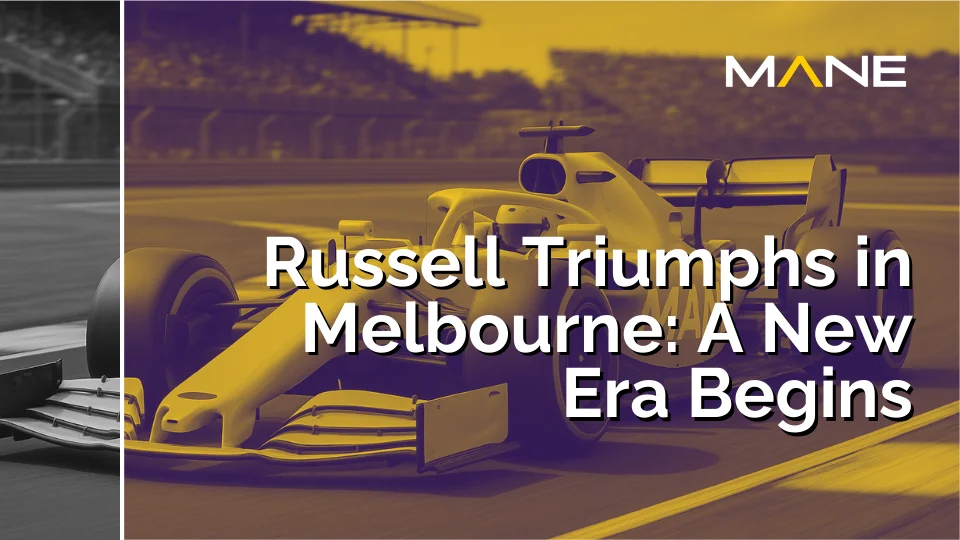
The 2026 Formula One season has commenced in spectacular fashion, with George Russell claiming victory at the Australian Grand Prix after an enthralling battle with Ferrari that showcased both the promise and peculiarities of the sport's revolutionary new regulations. The Mercedes driver dominated from the front at Albert Park in Melbourne, leading home teammate Kimi Antonelli for a commanding one-two finish that announced the Silver Arrows as early favourites for both championships. Yet the victory was far from straightforward, as Charles Leclerc and Lewis Hamilton mounted a ferocious challenge in the opening stages, trading positions with Russell no fewer than seven times in a breathtaking display of wheel-to-wheel combat that left spectators gasping and drivers adapting on the fly to F1's dramatically altered technical landscape. This opening round has set the tone for what promises to be a season of adaptation, innovation and intense competition as teams navigate the complexities of the new 50-50 hybrid power units and their impact on racing dynamics.
The Strategic Masterstroke That Decided Victory
Whilst Russell's pace and composure were undeniable throughout the 58-lap contest, the decisive moment came not through outright speed but strategic acumen during a Virtual Safety Car period triggered by Isack Hadjar's retirement on lap 12. Mercedes seized the opportunity to pit both Russell and Antonelli a lap later, gambling on track position and clean air rather than remaining out to extend their stint. Ferrari, conversely, elected to keep both Leclerc and Hamilton on circuit, a decision that would prove costly as the race unfolded. The contrasting approaches highlighted the complexities of strategy under the new regulations, where energy deployment and battery management play an even more central role than in previous seasons. Mercedes' advantage in understanding their own power unit's characteristics became apparent as Russell and Antonelli, now running in clear air on fresh rubber, could optimise their energy usage without the complications of traffic or defensive driving. When Leclerc and Hamilton eventually pitted under normal racing conditions on laps 25 and 28 respectively, the gap had grown insurmountable despite their fresher tyres for the remaining distance.
Ferrari team principal Frederic Vasseur defended the decision afterwards, stating "I have no regrets on the strategy, no regrets on the pace of today. We did a decent step compared to yesterday." However, Hamilton's radio message during the VSC period, suggesting "at least one of us should have come in," hinted at internal debate about the optimal approach. The seven-time world champion later adopted a more diplomatic tone, acknowledging "of course, we are not as fast as Mercedes and we have work to do but we are right in the fight." The strategic divergence between the two leading teams provides fascinating insight into their respective philosophies and risk appetites. Mercedes demonstrated the confidence of a team with superior race pace, willing to sacrifice track position temporarily because they trusted their ability to maintain and extend leads once in clean air. Ferrari's more conservative approach suggested either concerns about tyre degradation over an extended stint or perhaps insufficient confidence in their race pace advantage to justify the risk of losing track position. The outcome vindicated Mercedes' boldness, with Russell crossing the line 15 seconds clear of Leclerc despite the Ferrari driver's tyre advantage over the final 30 laps, whilst Antonelli's recovery from a poor start compromised by battery issues to secure second place demonstrated the Mercedes package's overall superiority in race trim.
Energy Deployment Drama and the New Racing Spectacle
The opening laps of the Australian Grand Prix provided a spectacular, if somewhat chaotic, demonstration of how Formula One's new technical regulations have fundamentally altered racing dynamics. The sport's shift to a 50-50 split between internal combustion and electrical power, combined with sophisticated energy deployment modes, created a breathtaking sequence of position changes that left even the drivers themselves scrambling to understand optimal tactics. Leclerc's blistering start from fourth on the grid showcased Ferrari's exceptional launch performance, the Monegasque driver sweeping into the lead through Turn One as Hamilton similarly capitalised from seventh to claim third. Russell regained the advantage by lap two, only for Leclerc to retake the position a lap later as energy deployment strategies played out in real time. The pair continued their absorbing duel through laps four to nine, with Russell making another committed move on lap eight, using his available electrical boost, only for Leclerc to respond immediately as the Mercedes driver's battery depleted. The pattern repeated at Turn Three on lap nine, where Russell locked up whilst attempting to brake from massively elevated speeds, allowing Leclerc to nip back through on the exit.
Russell reflected afterwards on the challenging nature of these early exchanges: "It was kind of a race we were expecting – chaotic start, difficult to match the battery – yoyoing a bit with the overtakes. The closing speeds are so big with these new cars but it was mega." Leclerc echoed these sentiments, admitting "it was a very tricky race! Honestly, at the start, none of us knew what to expect with the fights, the energy. It's even more tricky with the overtakes. You don't know when your battery will cut on the straights, so while defending there are massive speed differences." These comments from two of the sport's most accomplished drivers underscore the steep learning curve facing the entire field. The new regulations have introduced an element of uncertainty and tactical complexity that even extensive pre-season testing could not fully prepare teams for, creating opportunities for innovation and adaptation that may prove decisive as the season progresses. Sky Sports F1's Martin Brundle characterised Ferrari's strategic choice as critical, noting "what Ferrari gave up was track position and they lost control of the race. That was the critical thing." The assessment highlights how the new regulations have amplified the importance of track position, as the energy management requirements make overtaking simultaneously more spectacular when it occurs and more strategically complex to execute consistently.
Implications for Talent Acquisition and Team Development
Beyond the immediate racing spectacle, the Australian Grand Prix offered significant insights for teams' recruitment and talent acquisition strategies as they navigate Formula One's transformed technical landscape. The impressive debut of 18-year-old British rookie Arvid Lindblad, who claimed eighth place and championship points for Racing Bulls in his first grand prix, demonstrated the value of investing in young talent capable of adapting quickly to unprecedented challenges. Similarly, Gabriel Bortoleto's ninth-place finish for Audi on their F1 debut, despite the team manufacturing their own engines and having assumed control of the former Sauber operation only this year, showcased the importance of driver adaptability in an era of rapid technical evolution. These performances suggest that hiring trends in Formula 1 may increasingly favour drivers who demonstrate exceptional learning capacity and technical understanding rather than purely relying on experience with previous-generation machinery that bears little resemblance to current cars.
The contrasting fortunes of experienced campaigners also provide lessons for talent acquisition strategies. Max Verstappen's determined recovery from 20th on the grid to sixth place illustrated the enduring value of proven race craft and mental resilience, qualities that remain paramount regardless of technical regulations. Conversely, the heartbreaking exit of Oscar Piastri, who crashed on the formation lap after clipping a kerb at Turn Four, demonstrated that even highly-rated young drivers face a steep learning curve with cars whose behaviour differs markedly from their predecessors. Piastri's honest acknowledgement that the incident was "part of the learning curve in how these new cars behave" reflects the challenges facing all drivers as they adapt to machinery that multiple competitors have described as fundamentally different to drive. For team personnel involved in recruitment and driver development, these varied outcomes underscore the importance of comprehensive simulator programmes, extensive testing opportunities where regulations permit, and robust support systems to accelerate drivers' adaptation to the sport's new technical reality. The Australian Grand Prix 2026 has effectively served as a live audition for the entire grid, with teams across the paddock undoubtedly analysing performance data to inform their hiring trends and talent acquisition priorities for future seasons.
Championship Trajectory and Organisational Challenges Ahead
As Formula 1 2026 progresses beyond its season opener, the Australian Grand Prix has established clear narratives that will shape the championship battle and organisational responses across the paddock. Mercedes' 43-point advantage over Ferrari in the constructors' standings after just one round represents a substantial early lead, though the Scuderia can take encouragement from their competitive race pace and the knowledge that strategic refinements could close the gap. Russell's seven-point advantage over Antonelli in the drivers' championship reflects the one-two finish, whilst Leclerc trails by ten points and Hamilton by 13, keeping Ferrari's drivers well within striking distance should their team find performance improvements. The hiring trends evident in team compositions may influence competitive dynamics as the season unfolds, with organisations that have invested in technical specialists with expertise in hybrid power unit optimisation potentially enjoying advantages as teams refine their understanding of energy deployment strategies.
Looking ahead to the Chinese Grand Prix in Shanghai, which represents the first Sprint weekend of the Formula 1 season 2026, teams face compressed schedules that will test their organisational capabilities and adaptability. The recruitment decisions made during the off-season regarding race engineers, strategists and performance analysts will face immediate scrutiny as teams attempt to extract maximum performance across Sprint qualifying, the Sprint race and traditional qualifying and grand prix formats. Mercedes' current advantage appears substantial, with their power unit demonstrating superior electrical energy harvesting and deployment efficiency, but Ferrari's strong cornering speeds and race pace suggest the competitive order remains fluid. Lando Norris's post-race assessment that "Ferrari have the best car, their cornering speeds are unbelievable" indicates that multiple teams possess distinct performance advantages in different areas, creating opportunities for circuit-specific competitiveness that could produce varied winners as the calendar progresses through diverse track layouts and conditions.
The talent acquisition implications extend beyond driver recruitment to encompass entire technical organisations, as teams recognise that success under these regulations requires specialists who understand the intricacies of electrical energy systems, battery management and the integration of dual power sources. Cadillac's achievement in reaching the finish line with Sergio Pérez in 16th place, despite being three laps down, represents a creditable debut for an organisation built from scratch in barely 12 months, demonstrating that effective recruitment and organisational development can produce functional results even under compressed timelines. As the season progresses, the teams that have made the smartest hiring decisions and invested most effectively in talent acquisition across technical, engineering and strategic departments will likely emerge as consistent frontrunners. The Australian Grand Prix has provided the first meaningful data points, but the championship's ultimate destination will be determined by which organisations can optimise their human capital most effectively whilst navigating the unprecedented technical challenges of the 2026 regulations. Russell's commanding victory and Mercedes' dominant one-two finish have established the benchmark, but the thrilling early battle with Ferrari suggests the season ahead will provide ample opportunities for multiple contenders to showcase their capabilities in what promises to be a fascinating campaign.
Related Posts
The Dawn of Formula 1's Sustainability Revolution
11 Mar, 2026